
Ebook
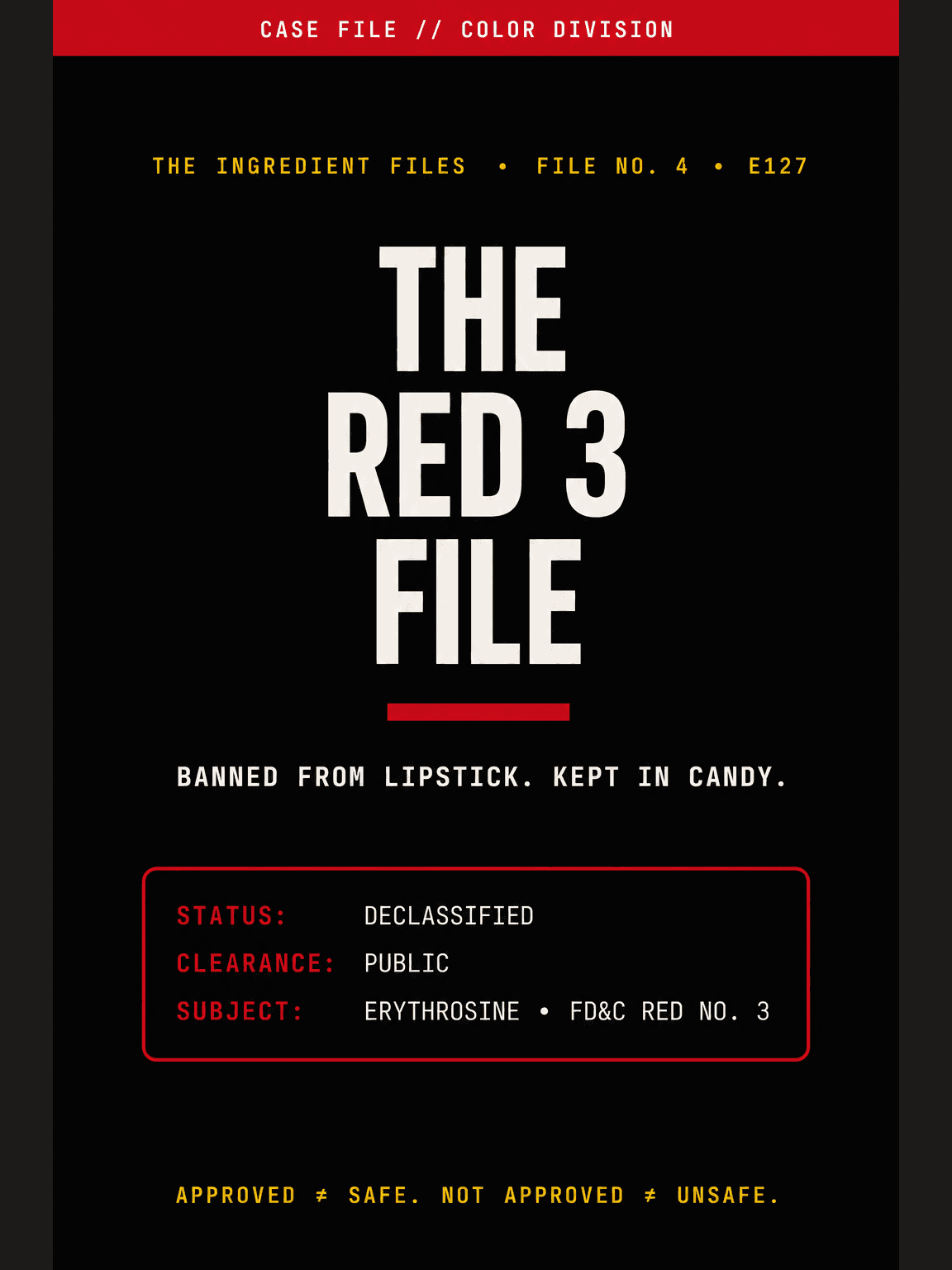
The Red 3 File: Banned from Lipstick. Kept in Candy.
Red 3 was pulled from cosmetics in 1990 over thyroid tumors in rats. You could not put it on your lips. You could still eat it — for another thirty-five years. When the FDA finally revoked its use in food, the reason wasn't a new finding. It was the Delaney Clause, a provision that requires a ban on any additive shown to cause cancer in animals, at any dose, regardless of whether the mechanism applies to people. The agency's own position is that the rat mechanism doesn't occur in humans. The ban happened anyway, because the law left no discretion. This file goes to the record: what the 1990 decision was based on, why food and cosmetics were treated differently for three decades, how the Delaney Clause works, and what it means that a substance can be banned by statute while the regulator says the risk doesn't transfer. Every claim is graded in a certainty ledger — established, probable, open, unsupported — and nothing gets promoted a grade to make a better headline. Where the evidence runs out, the ledger says so. It closes with a wallet card: what to look for on a package in ten seconds, no chemistry required. Not a scare, not a cleanse, not medical advice. The principle is on the cover and it cuts both ways — Approved ≠ Safe. Not Approved ≠ Unsafe. Instant PDF, built to read on a phone.
- What the 1990 cosmetics decision was actually based on
- Why food and cosmetics were treated differently for three decades
- How the Delaney Clause forces a ban regardless of dose or mechanism
- A certainty ledger that grades every claim honestly
- A wallet card for reading a package in ten seconds
Goes to the Record
Banned from lipstick, kept in candy for 35 years
Certainty Ledger
Established, probable, open, unsupported
Wallet Card Included
Read a package in ten seconds, no chemistry
Instant PDF
Built to read on a phone